Archive

March 2026

Browsing

Most people who are just starting out choose a Demat account that has no opening costs, low brokerage, or attractive AMC waivers. However, MTF interest rates—the daily cost of borrowing money through the Margin Trading Facility—often become the most important factor for traders who plan to use leverage, even if they only plan to do so occasionally. If the broker charges a lot of interest on MTF loans, an account that seems perfect can quickly cost a lot of money.

Most MTF interest rates are between 12% and 18% per year, or higher for stocks that are very volatile. These rates are calculated daily on the amount that has been funded.

Being interested every day as a silent profit eater

When you make a regular trade, most of the costs are one-time (brokerage and legal fees), but when you keep an MTF position, interest builds up every day. This cost gets pretty high for deals that last a while:

  • It costs 123 rupees a day to borrow 3 lakh rupees at 15% interest per year.
  • There will be interest of ₹7,380 after 60 days.
  • After 90 days, it’s worth about 11070 rupees.

When interest rates are high, traders have to ask for much higher profits just to break even. This means that many trades that would otherwise be good can’t be made. If you plan to hold on to your investments for more than a few weeks, brokers with lower MTF interest (12–14%) become much more attractive.

MTF Rates as a Way for Brokers to Stand Out

When choosing between a short list of Demat companies, MTF interest rates are often what set them apart:

  • High MTF interest rates (15–18%) at discount brokers are good for deals with no broker fees, but they are pricey for leverage.
  • Mid-level brokers with reasonable MTF rates (12–14%) are better for a fair use of cash and borrowed money.
  • Brokers that offer better rates (for funded accounts, big volume, or promotional periods) are very appealing to MTF users who do it often.

It’s not uncommon for experienced traders to choose a provider’s open Demat account over others because they offer better MTF interest rates.

Effects on Account Choice on the Mind and the Real World

When MTF interest is high, real friction happens:

  • Not wanting to make risky trades leads to missed chances
  • Early sell-offs to “stop the interest clock” → short-changing winners
  • Preference for brokers with lower rates leads to more trust and happiness.

A Demat account with reasonable MTF charges promotes smart and secure use of leverage, which makes the whole experience better and more useful.

When you choose a Demat account, MTF interest rates are not a small matter; they have a big impact on how much it costs and how useful it is in the long run. High fees can make using leverage impractical for most trades, but low fees can make strong medium-term strategies possible with little risk.

Cross-border gambling presents unique challenges requiring payment solutions that transcend regional banking limitations and currency conversion complications. beste casinos die tether have emerged as preferred destinations for international players seeking reliable platforms that eliminate geographical payment barriers. These operations understand the specific needs of diverse player populations and structure their services accordingly, creating genuinely accessible gaming environments for worldwide audiences.

Regional payment compatibility

International players often struggle with traditional casinos requiring specific credit cards, regional bank transfers, or payment processors unavailable in their countries. Quality Tether platforms bypass these restrictions entirely through blockchain infrastructure functioning identically regardless of player location. Someone in Argentina can deposit using the same process as someone in Thailand, eliminating the frustration of discovering preferred casinos don’t support their local payment options. The uniformity extends beyond basic functionality. Transaction speeds, fee structures, and processing requirements remain consistent across borders rather than varying based on geographical origin. This standardization creates predictable experiences that traditional international payment systems cannot match due to their inherent reliance on regional financial networks.

Currency conversion elimination

Players from non-dollar economies face double conversion penalties when gambling on traditional platforms. They convert local currency to dollars for deposits, then reverse the process during withdrawals, losing percentages to exchange rates at both transaction points. Tether eliminates this inefficiency by allowing a single conversion from local currency to USDT that then functions seamlessly across all gambling activities. Conversion savings example:

  • The traditional method loses 2-3% on each conversion direction
  • Total impact reaches 4-6% of the gambling budget
  • The USDT approach requires only one initial conversion
  • Savings compound over multiple gambling sessions

The accumulated benefits prove substantial for regular international players who might otherwise lose hundreds annually to unnecessary currency conversions. These savings translate directly into additional gambling capital or simply reduced costs for equivalent entertainment value.

Language support availability

First-tier international casinos provide interfaces in multiple languages rather than English-only presentations that exclude non-native speakers. Spanish, Portuguese, German, French, Russian, and Asian languages should appear as standard options, allowing comfortable navigation without translation tools. Customer support staff speaking these languages ensures players can explain concerns clearly without communication barriers, preventing misunderstandings. The language support extends to game titles, promotional terms, and help documentation. Comprehensive translation demonstrates commitment to serving international audiences rather than merely tolerating their presence. Platforms investing in proper localization signal genuine interest in providing quality experiences across linguistic boundaries.

Time zone accommodation

Customer support availability must span time zones rather than maintaining single-region hours that leave international players stranded during their active gambling periods. Genuine 24/7 support means knowledgeable staff available at 3 AM European time or midday Asian hours, not automated responses suggesting patience until business hours resume. Test support responsiveness during your typical gambling times before committing significant deposits. If you primarily play during late Asian evening hours, verify that support actually functions during that window rather than discovering inadequate coverage only when urgent issues arise.

Mobile optimization priorities

International players often rely heavily on mobile devices for gambling due to limited computer access or a preference for portable entertainment. Superior platforms invest in responsive designs that function smoothly across various devices, screen sizes, and connection speeds common in different regions. The mobile experience should match desktop quality rather than feeling like a compromised afterthought. Games must load efficiently even on slower international internet connections that might not match speeds available in developed markets. Platforms optimized only for high-bandwidth environments exclude players from regions with infrastructure limitations, reducing their effective international accessibility despite technical USDT acceptance.

Purchasing a vehicle is one of the most significant financial decisions a consumer can make. For generations, the process was entirely uniform: a buyer would walk onto a local dealership lot, browse the physical inventory, engage in face-to-face negotiations with a salesperson, and drive away in a chosen vehicle. However, the digital revolution has completely disrupted this traditional model.

Today, car buyers stand at a crossroads between two distinct purchasing methodologies: sourcing a vehicle through online platforms or visiting a brick-and-mortar local car dealership. While both approaches ultimately achieve the same objective, the structural paths, financial implications, and overall consumer experiences could not be more different. Understanding the fundamental nuances of each method is essential for navigating the modern automotive market effectively.

Sourcing Online: Efficiency, Vast Selection, and Price Transparency

Sourcing a car online shifts the power dynamic into the hands of the consumer by removing geographical constraints and high-pressure sales environments. This digital-first approach relies heavily on extensive data aggregators and streamlined logistics networks.

Unlimited Inventory Access

The most immediate advantage of online sourcing is the sheer scale of available inventory. When visiting a physical lot, you are limited to the exact vehicles parked on that property at that specific moment. Online automotive search tools pull data from thousands of sources nationwide. Whether you are looking for a highly specific exterior paint color, a rare interior trim package, or an uncommon engine configuration, digital platforms allow you to scan the entire country in seconds.

The No-Haggle Pricing Structure

Many dedicated online car retailers operate on a fixed-price model. The price displayed on the screen is the final price of the vehicle, excluding standard state taxes and registration fees. This structure eliminates the stressful, adversarial negotiation process that defines traditional car buying. For consumers who experience anxiety over bargaining or worry about hidden dealer markups, the transparency of upfront online pricing provides immense peace of mind.

Desktop Convenience and Delivery Mechanics

The entire transaction, including trade-in evaluation, financing pre-approval, and contract signing, can be completed from a home computer. Once the paperwork is processed, the vehicle is delivered directly to your driveway via a flatbed truck. Furthermore, major online platforms offer built-in return windows, typically giving the buyer seven days to drive the vehicle and decide if they want to keep it.

Visiting a Local Dealer: Physical Validation, Immediate Ownership, and Relationship Building

Despite the rapid growth of e-commerce, local dealerships remain a dominant force in the automotive industry. The physical car dealership offers a tangible, immediate, and localized experience that cannot be perfectly replicated by a digital screen.

The Imperative of the Physical Test Drive

No amount of high-definition photography, 360-degree virtual tours, or written specifications can accurately convey how a vehicle feels on the road. Sitting in the cabin allows you to assess seat comfort, visibility, ergonomics, blind spots, and the intuitiveness of the infotainment system. A physical test drive reveals crucial driving dynamics, such as acceleration responsiveness, braking feel, cabin noise insulation, and suspension performance over real-world road imperfections.

The Power of Local Price Negotiation

While online pricing is transparent, it is rarely flexible. Local dealerships operate on a flexible pricing model, which opens the door for skilled negotiators to secure a better deal. A local dealer facing monthly sales quotas or trying to move aging inventory may be willing to lower the vehicle price below market average, offer dealer-specific cash incentives, or increase the valuation of your trade-in vehicle to close the deal on the spot.

Immediate Asset Acquisition and On-Site Servicing

When you buy a vehicle from a local dealer, you can finalize the transaction and drive the car home the exact same afternoon. There are no shipping delays or transit vulnerabilities. Additionally, purchasing locally establishes an immediate relationship with the dealer’s service department. This local connection simplifies regular maintenance visits, factory recall fixes, and warranty claims under the supervision of certified mechanics familiar with your specific vehicle history.


Comparative Dynamics: A Strategic Overview

To determine which method aligns with your personal buying habits, it is helpful to analyze how key phases of the acquisition process differ across both environments.

  • Trade-In Appraisals: Online platforms use algorithmic models based on vehicle history reports and user-submitted photos to provide an instant, sight-unseen offer. Local dealers conduct a physical inspection on-site, which may allow you to argue for a higher valuation if the car is in exceptional mechanical condition.

  • Financing Options: Online sourcing usually funnels buyers through specialized digital lenders or large national banks. Local dealerships have dedicated finance managers who maintain relationships with dozens of local credit unions and regional banks, frequently allowing them to shop around and assemble a competitive interest rate package for buyers with unique credit profiles.

  • Add-On Products: Dealership finance offices are notorious for making aggressive pitches for extended warranties, paint protection, gap insurance, and tire-and-wheel packages. Online platforms offer these same products during the digital checkout phase, but they are presented as optional checkboxes, eliminating the interpersonal sales pressure.


Frequently Asked Questions

How do delivery fees factor into the total cost of an online car purchase?

Online car retailers often provide free shipping if the vehicle is located within a specific radius of their local fulfillment hubs. However, if you source a vehicle from across the country, shipping fees can range from several hundred to over a thousand dollars. This delivery cost is usually non-refundable, even if you utilize the platform’s money-back return guarantee.

Can I arrange an independent pre-purchase inspection when buying a car entirely online?

Yes, but the timing differs from a traditional purchase. Because the vehicle is shipped from a remote facility, you cannot inspect it before it arrives. Instead, you must coordinate with a local mechanic to perform a comprehensive bumper-to-bumper inspection immediately upon delivery, ensuring any hidden mechanical flaws are discovered within the platform’s seven-day return window.

Why do local dealerships sometimes list vehicles online at lower prices than what is stated on the physical lot window sticker?

Local dealerships utilize aggressive internet pricing to attract digital shoppers who are sorting inventory by the lowest available price. These online listings often factor in every possible conditional incentive, such as military discounts, recent college graduate rebates, or loyalty programs, which a walk-in buyer might not automatically qualify for without specific verification.

What recourse do I have if a vehicle purchased from a local dealer breaks down immediately after sale?

Recourse depends heavily on state laws and the type of contract signed. If the vehicle was sold under a factory warranty or a dealer-certified pre-owned program, repairs are covered. However, if a used vehicle is purchased explicitly as-is, the buyer assumes all financial responsibility for mechanical failures the moment they drive off the lot, unless the state has specific used-car lemon laws.

Is it safe to share sensitive financial information and social security numbers with online car buying platforms?

Reputable national online automotive platforms utilize advanced encryption protocols and secure identity verification portals matching the security standards of major banking institutions. Consumers should verify that the website URL contains the secure lock icon and avoid sharing financial details over standard unencrypted email channels.

How do local car dealerships handle out-of-state vehicle registration and license plates?

If you purchase a car from a local dealer but reside in an adjacent state, the dealership’s finance department handles the out-of-state paperwork on your behalf. They calculate the appropriate sales tax for your home jurisdiction, collect the fees, and submit the registration to your state Department of Motor Vehicles, which then mails the physical license plates directly to your home address.

For decades, consumer lending in the United States has relied on a single, dominant metric to evaluate risk: the FICO score. Developed by the Fair Isaac Corporation in the late 1980s, this three-digit number became the universal language of creditworthiness. It dictated who could buy a home, secure an auto loan, or qualify for a credit card.

While the traditional FICO model brought standardization to a previously fragmented system, it was built for a different economic era. The classic scoring methodology looks at consumer behavior through a narrow lens, relying strictly on historical credit data from the three major credit bureaus. Today, a radical shift is underway. Driven by advancements in artificial intelligence, changing consumer habits, and a push for financial inclusion, the underwriting landscape is evolving far beyond traditional FICO models.

The Limitations of the Legacy Credit Scoring System

To understand why the credit scoring industry is changing, one must first analyze the fundamental flaws built into the legacy system. The traditional credit framework inherently favors individuals who already have established access to banking and debt instruments.

The Invisible Prime Population

A major drawback of traditional scoring models is their inability to evaluate individuals who do not use conventional credit products. Consumers who prefer to pay with cash or debit cards, or who have never taken out a major loan, are frequently categorized as credit invisible or unscorable. This population does not necessarily represent a high default risk; rather, they simply lack the specific financial footprint required by outdated algorithms to generate a score.

Lagging and Reactive Data Structures

Traditional credit scores are heavily reliant on retrospective data, such as a consumer’s payment history over the last several years, total credit utilization, and the length of their credit accounts. This historical focus means the score is often slow to reflect positive changes in a consumer’s current financial health. For instance, an individual who experienced a medical emergency years ago might still suffer from a depressed score, even if their income has since doubled and their present-day cash flow is highly stable.

The Vanguard of Modern Underwriting: Alternative Data Integration

The modern evolution of credit assessment is defined by the integration of alternative data. This term encompasses any financial information that sits outside the traditional credit bureau report but offers deep insights into a consumer’s day-to-day fiscal responsibility.

Telecommunications and Utility Payment Streams

One of the most reliable indicators of a consumer’s willingness to pay their debts is how they manage their everyday household obligations. Newer credit modeling systems now securely ingest payment data from mobile phone providers, electric companies, water utilities, and internet services. Consistently paying a monthly utility bill on time for years demonstrates a level of financial discipline that traditional models completely ignore.

Direct Cash Flow Analysis and Open Banking

The rise of secure open banking APIs has made it possible for modern lenders to evaluate risk by analyzing real-time bank account activity directly. Instead of merely looking at how much debt a consumer owes, algorithms can analyze a consumer’s recurring income streams, average daily account balances, and overall spending habits. This granular cash flow underwriting allows lenders to see if an applicant has a healthy margin of disposable income each month, providing a highly accurate, real-time assessment of their capacity to take on new credit.

Rental History Verification

For millions of Americans, rent is their largest single monthly financial obligation. Historically, timely rent payments did not contribute to a consumer’s credit score, while an eviction or a collection account would severely damage it. Modern scoring platforms are correcting this imbalance by allowing renters to opt-in to services that track and report their consistent on-time rent histories, instantly building credit depth without forcing them to take on high-interest credit card debt.

Advanced Methodologies and the Role of Machine Learning

The evolution of underwriting involves more than just collecting new types of data; it also requires completely changing how that data is processed. Traditional credit models rely on linear logistic regression, a mathematical approach that evaluates a handful of static variables independently.

The Power of Machine Learning Algorithms

Modern fintech companies and forward-thinking financial institutions are deploying complex machine learning algorithms to evaluate thousands of data points simultaneously. These advanced systems excel at identifying subtle, non-linear correlations that human analysts and traditional formulas miss. For example, a machine learning model might discover that the specific time of month a consumer pays their bills, combined with the stability of their checking account balance, is highly predictive of future loan performance.

Continuous Self-Correction and Risk Refinement

Unlike static legacy scoring systems that are updated only once every few years, machine learning models can continuously refine their predictive accuracy as they digest new loan performance data. This fluid approach allows lenders to adjust their risk thresholds dynamically in response to shifting macroeconomic conditions, preventing over-lending during economic downturns and expanding access to capital during periods of growth.

The Strategic Shifts: FICO resilience and Competitor Emergence

The legacy credit giants are not standing still as the industry transforms. The landscape has become highly competitive, driving innovation across both established institutions and newer industry players.

  • The Evolution of VantageScore: Created as a joint venture by the three major credit bureaus, VantageScore has emerged as a fierce competitor to the dominant FICO model. Its latest iterations utilize advanced machine learning and incorporate trended data, reflecting how a consumer’s balances change over time rather than just capturing a single monthly snapshot.

  • FICO Next-Generation Adaptations: In response to market pressures, the Fair Isaac Corporation launched newer scoring models, such as FICO Score 10 T and FICO XD. These variations incorporate trended data and alternative data streams, allowing traditional lenders to adopt modern underwriting techniques without completely replacing their existing technological infrastructure.

  • Proprietary Fintech Neo-Lending: Many digital fintech platforms have bypassed third-party scores altogether. They utilize proprietary, in-house risk engines that analyze direct consumer data to approve personal loans, auto financing, and buy-now-pay-later arrangements for demographics historically rejected by standard banking institutions.


Frequently Asked Questions

How does trended data differ from the traditional snapshot data used in older credit models?

Traditional credit models capture a single snapshot of a consumer’s financial standing at one specific moment, such as their total credit utilization on the day the report was pulled. Trended data looks at a historical trajectory, typically tracking the past twenty-four months of a consumer’s balances. This distinction allows lenders to see if a consumer is actively paying down their debt over time or consistently accumulating higher balances month after month.

What specific security and privacy risks are associated with alternative data underwriting?

The primary risks center around data privacy and consumer consent. Accessing real-time bank transaction data requires users to link their checking accounts via third-party financial data networks. This setup creates potential vulnerabilities regarding data breaches, unauthorized data sharing, and the algorithmic profiling of personal spending habits, requiring strict regulatory oversight to ensure consumer data remains protected and secure.

Can a consumer explicitly opt-out of alternative data tracking, or is it collected automatically?

Alternative data collection is primarily an opt-in system for consumers. Unlike traditional credit bureau reporting, which occurs automatically through financial institutions, consumers must explicitly grant permission for platforms to access their utility accounts, rental payment records, or bank transaction histories to supplement their credit profiles.

How do machine learning credit models comply with federal fair lending laws and anti-discrimination regulations?

Compliance is achieved through rigorous algorithmic auditing and the elimination of proxy variables. Lenders must test their machine learning models to ensure they do not introduce disparate impacts against protected classes. Additionally, the algorithms must be structured to provide clear, legally required adverse action notices, which explain the exact, transparent reasons why an applicant was denied credit.

Does the use of alternative data automatically guarantee lower interest rates for consumers?

No, alternative data does not guarantee lower rates, but it significantly expands the probability of loan approval. For a credit-invisible consumer, alternative data establishes a baseline of financial responsibility where none previously existed. While it may initialy result in standard or mid-tier interest rates, it prevents the absolute denial of credit and provides a clear pathway to qualify for prime interest rates over time.

How long does it take for positive alternative data, like utility payments, to affect a credit profile?

Positive alternative data can influence an underwriting decision almost immediately once a consumer opts-in and links their accounts. Because platforms pull historical billing records directly from the utility provider or bank log, several months or even years of consistent, on-time payment history can be instantly ingested and factored into a modern lender’s risk evaluation.

Are major mortgage lenders currently accepting alternative credit scores for home loans?

The mortgage industry has historically been the slowest sector to adopt new scoring models due to strict federal underwriting guidelines. However, government-sponsored enterprises like Fannie Mae and Freddie Mac have updated their policies to allow for the integration of trended credit data and positive rental history checks, signaling a major shift toward modern risk assessment in the housing market.

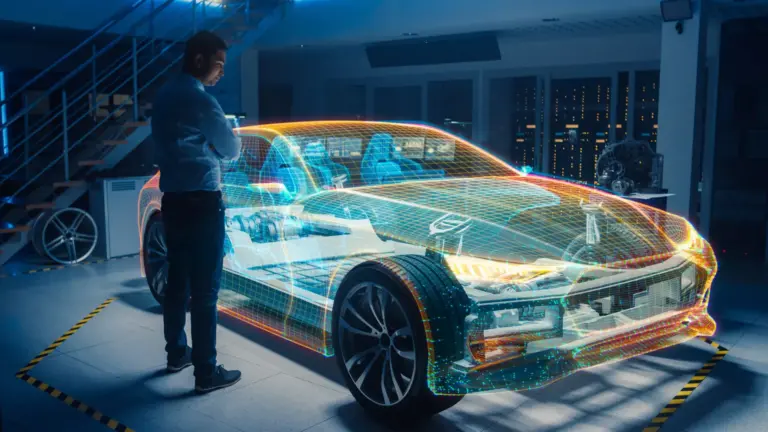
Modern passenger vehicles are highly sophisticated computers on wheels, executing millions of calculations every second to ensure comfort, efficiency, and survival. Yet, when the average driver slides into the cabin, turns the ignition, and navigates through daily traffic, the immense engineering complexity beneath their fingertips is entirely invisible.

Features that once required decades of rigorous laboratory experimentation, aerospace-grade computing power, and radical physics paradigms have quietly transitioned into standard, expected equipment. We treat them as mundane design choices rather than the monumental technical achievements they truly are. By peeling back the layers of everyday automotive technology, we uncover the brilliant engineering marvels that have completely transformed the act of driving.

The Crumple Zone: Managing Kinetic Energy Through Controlled Destruction

For the first half of automotive history, the prevailing safety philosophy was rigidity. Automobile manufacturers believed that building a car as strong and unyielding as a tank was the ultimate way to protect its occupants. This intuitive assumption proved catastrophically wrong. In a high-speed collision, an unyielding chassis stops instantaneously, transferring the lethal kinetic energy directly through the cabin and into the human bodies inside.

The Innovation of Deflection

The paradigm shifted entirely with the invention of the crumple zone. Automotive engineers realized that to save lives, the vehicle itself had to sacrifice its structural integrity. Crumple zones are deliberately designed areas at the front and rear of a vehicle that are engineered to deform, buckle, and collapse in a highly controlled sequence during an impact.

Extending Impact Duration

By lengthening the time it takes for a vehicle to come to a complete stop by even a fraction of a second, the crumple zone dramatically reduces the peak deceleration forces acting on passengers. The energy of the crash is consumed by the bending of specialized high-strength steel and aluminum structures, wrapping a protective cocoon around the rigid safety cell of the passenger cabin. Every time a modern car is completely totaled in an accident yet the passengers walk away with minor bruises, it is a direct testament to this masterclass in kinetic energy management.

Antilock Braking Systems: Staying on the Edge of Friction

Stopping a vehicle weighing several thousand pounds on a rain-slicked highway requires an intricate dance with the laws of physics. Under heavy, panicked braking, a vehicle’s tires can easily lose traction and lock up completely. Once a tire stops rotating and begins to skid, the driver loses all steering control, turning the automobile into an unguided projectile.

The Computational Pulse

The development of the modern Antilock Braking System solved this fundamental hazard. The system relies on wheel speed sensors that continuously monitor the rotational velocity of each individual tire. If the system detects that a wheel is about to stop spinning entirely while the vehicle is still moving, it intervenes at an astonishing speed.

Modulating Hydraulic Pressure

The electronic control unit modulates the hydraulic brake pressure to that specific wheel, pulsing the brakes up to fifteen times per second. This rapid modulation allows the tire to sit precisely at the absolute threshold of maximum braking friction. By preventing the skid, ABS ensures that the driver can actively steer around obstacles even while burying their foot on the brake pedal, completely altering emergency collision avoidance.

Electronic Fuel Injection: The Hyper-Optimized Internal Combustion

For nearly a century, the carburetor was the mechanical heart of the internal combustion engine. It was an intricate, entirely analog web of tiny tubes, jets, and floats designed to mix air and fuel together based on engine vacuum. While brilliant for its time, the carburetor was inherently imprecise, highly sensitive to changes in weather or altitude, and prone to wasting immense amounts of fuel.

Real-Time Atmospheric Adaptability

The transition to Electronic Fuel Injection brought engine management into the digital age. Modern engines utilize a complex array of sensors to measure exact intake air volume, engine temperature, throttle position, ambient atmospheric pressure, and exhaust oxygen content.

Microscopic Fuel Delivery

A centralized engine control unit processes this data instantly, calculating the precise microsecond duration required to spray an atomized mist of fuel directly into the combustion chamber. This optimization happens cycle by cycle, thousands of times a minute. The result is an engine that starts instantly in sub-zero temperatures, self-corrects for high altitude mountain passes, extracts maximum horsepower from every drop of fuel, and reduces harmful exhaust emissions to a fraction of historic levels.

Interconnected Automotive Miracles

Beyond the heavy mechanical systems, a host of other invisible marvels collaborate harmoniously during every single commute to elevate the driving experience.

  • Variable Valve Timing: Instead of operating on a fixed mechanical cycle, modern engines dynamically shift the opening and closing timings of their internal valves on the fly. This enables an engine to behave like an ultra-efficient commuter motor at low speeds and instantly transform into a high-performance sports engine during highway acceleration.

  • Tire Pressure Monitoring Systems: Utilizing minute, wheel-mounted radio frequency transmitters, these systems continuously gauge the internal air density of your tires. This preventative tech preserves fuel economy, prevents catastrophic highway blowouts, and ensures optimal tire contact patches without requiring manual gauge checks.

  • Laminated Acoustic Glass: Windshields are no longer simple sheets of glass. They are complex sandwiches composed of two layers of glass bonded together by a specialized, acoustically dampening polyvinyl butyral interlayer. This thin acoustic barrier reflects exterior wind and tire frequencies away from the cabin, while ensuring the glass does not shatter into dangerous shards during an impact.

Frequently Asked Questions

How does Electronic Stability Control differ fundamentally from an Antilock Braking System?

While ABS strictly prevents wheels from locking up during linear braking, Electronic Stability Control is designed to correct lateral skidding and loss of steering control during turns. ESC utilizes yaw rate sensors and steering angle indicators to detect if a car is spinning out or sliding wide. It automatically applies braking pressure to individual wheels and reduces engine power to pull the vehicle back onto the driver’s intended path.

Why did it take so long for Crumple Zones to become standard if the physics behind them is so straightforward?

The implementation of crumple zones required massive advancements in metallurgy and supercomputer structural modeling. Engineers had to develop specialized high-strength steels that could be stamped into highly specific geometries capable of folding predictably under immense stress, while ensuring adjacent passenger cabin pillars remained absolutely rigid.

What is the engineering purpose behind the black dots found around the edges of a windshield?

Those black dots are called frits. They are made of an ultra-durable ceramic paint baked directly into the glass. The frit serves multiple engineering purposes: it provides a rough texture for the polyurethane adhesive to bond the windshield securely to the car frame, blocks damaging ultraviolet radiation from degrading that adhesive over time, and visually hides the structural glue lines from the outside.

How do modern vehicles manage to keep passenger cabins quiet despite moving at high highway speeds?

Cabin serenity is achieved through complex aerodynamics and acoustic isolation materials. Engineers utilize virtual wind tunnels to eliminate sharp body angles that generate air turbulence. Beneath the interior panels, vehicles are lined with engineered liquid-applied sound deadeners, micro-porous fiber mats, and double-walled rubber door seals designed to absorb and deflect low-frequency road vibrations.

How do smart keyless entry systems function securely without draining the car battery?

Keyless entry systems utilize a highly efficient, low-frequency localized radio network. The vehicle continuously emits a low-power ping. When your key fob enters a specific close range, it wakes up, processes an encrypted rolling security code, and transmits back an authentication signal. Because the communication relies on short bursts of localized data, standby power consumption remains virtually unnoticeable.

What allows modern automatic transmissions to shift gears smoothly compared to older vehicles?

Older automatic transmissions relied entirely on internal hydraulic fluid pressure changes to force shifts. Modern transmissions use highly sensitive electronic solenoids controlled by a computer that communicates directly with the engine. When a shift occurs, the computer momentarily dials back engine torque for a millisecond, allowing the internal clutch packs to engage seamlessly without any physical jerking motion.

How does a modern vehicle engine adjust itself automatically to prevent damage from poor quality fuel?

Modern engines are equipped with highly sensitive acoustic sensors called knock sensors. If you put lower-grade fuel into an engine designed for premium fuel, it can cause erratic premature explosions inside the cylinders, known as engine knock. The knock sensor detects the unique structural frequency of this vibration instantly, causing the engine computer to automatically retard the ignition timing to eliminate the risk of internal mechanical damage.