
I’d given myself two days in Delhi before moving on, which felt adequate for what I had planned. It wasn’t. The problem was the cafés in the southern parts of the city, specifically the areas around Hauz Khas, Shahpur Jat, and Lodhi Colony, kept offering reasons to stay in one place longer than any itinerary could absorb.
How it started in Hauz Khas?
My first afternoon was spent in Hauz Khas Village thinking about the old reservoir and the ruins of Feroz Shah Tughlaq’s madrasa rather than the popular cafés, about which I had some idea. The ruins are really worth visiting, especially the view of the water in the late afternoon when the light coming from a low sun makes the ruins not just look ancient but also become apparent.
The walk involved passing through the village’s busy streets, where I stumbled upon a café with a terrace that overlooked the tank. I ordered a coffee and spent an hour or so there enjoying the view instead of doing anything else.
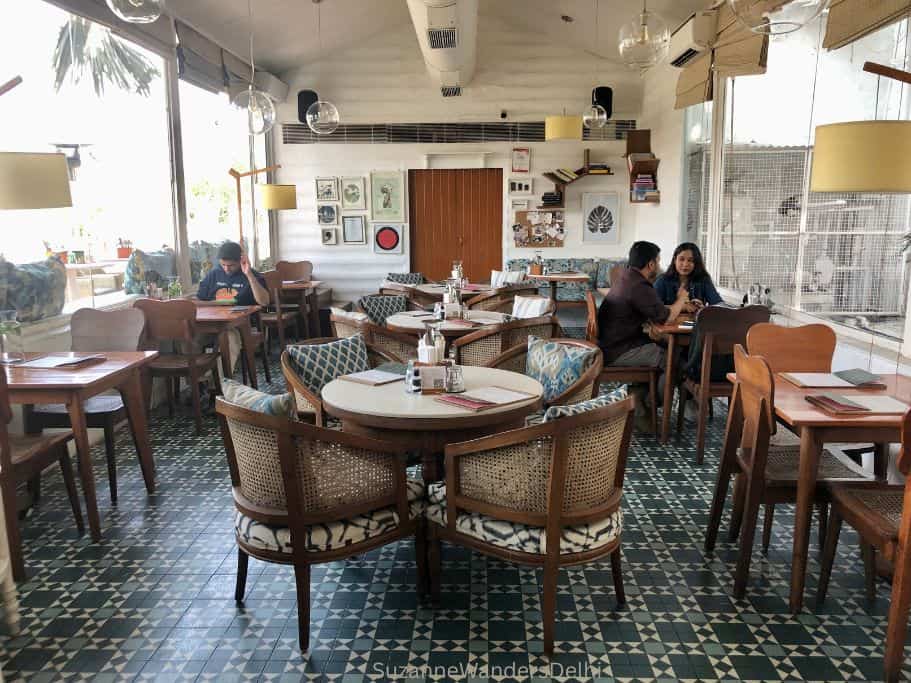
The café itself was well designed without being ostentatious about it, the kind of place where the choices made about furniture and light feel considered rather than curated for photographs. The coffee was seriously good. The terrace was the reason to be there.
Lodhi Colony and the art that changed the walk
Lodhi Colony is known among Delhi’s street art community for the large-scale murals commissioned across its residential buildings as part of an ongoing public art project, and walking through it without knowing this in advance produces a disorienting experience where you keep turning a corner expecting an ordinary colony street and finding a six-storey painted wall instead.
I went initially for the murals and discovered a café tucked into the colony’s market area that I’d have walked past if someone hadn’t been sitting outside it with a coffee that looked worth investigating. The place was small and unpretentious and served a filter coffee made with beans from a roaster.
I sat there for an hour after finishing the coffee because the lane outside was interesting enough to watch without needing to participate. There was no one rushing me, which remains my primary criterion for whether a café is genuinely good at what it’s supposed to be doing.
Khan Market, which I resisted and then didn’t
For most of the journey, I gave Khan Market a miss since I have always had reservations about places which charge excessively for commonplace things. I finally went there on the last day because I was nearby and it wouldn’t have been wise to leave Delhi without exploring this entire area.
I must admit that the reservation was justified to a certain extent. What I mean is, Khan Market is undeniably expensive, but one little independent bookshop-cum-café at the quieter end made me really happy. Books were displayed in a well-thought-out way in the shop, and I was happy to have an extensive menu that included many items to go along with reading.
What the cafés in South Delhi added up to?
South Delhi’s café scene is not just a single thing. It ranges from the terrace overlooking medieval ruins to the repurposed ground floor in a working residential area to the colony market hidden behind murals. The variety across these formats reflects a part of the city that contains several distinct identities within a relatively short distance of each other.
Several hotels in Delhi sit close enough to South Delhi that reaching Hauz Khas or Shahpur Jat by metro or auto requires no significant planning. Staying in the southern part of the city rather than the centre makes this kind of café exploration a default afternoon activity rather than something requiring a separate trip. I’d plan around that proximity next time rather than discovering it partway through a trip that was already running longer than intended.



Comments are closed.